
QuickBooks is one of the most widely used accounting applications for managing business finances, payroll, invoices, expenses, and financial reports. It helps businesses organize their accounting tasks efficiently and simplifies day-to-day financial management. However, like any software application, QuickBooks can occasionally display errors that prevent users from accessing important company data. One of the most common issues is QuickBooks Error Code 6000.
What Is QuickBooks Error Code 6000?
QuickBooks Error Code 6000 is a company file error that occurs when the application cannot access, open, or verify a company file. Depending on the situation, the error may appear with different variations, but the underlying issue usually involves communication between QuickBooks and the company file.
The error can affect both single-user and multi-user environments and may interrupt normal accounting operations.
Common Causes of QuickBooks Error Code 6000
Understanding the possible causes helps determine the most appropriate solution.
Damaged Company File
A corrupted company file is one of the most common reasons this error appears.
Incorrect Network Configuration
If the company file is stored on another computer, incorrect network settings may prevent QuickBooks from accessing it.
Corrupted Configuration Files
Configuration files that help QuickBooks locate the company file may become damaged over time.
Insufficient File Permissions
If Windows restricts access to the company file or its folder, QuickBooks may display Error Code 6000.
Security Software Interference
Certain firewall or antivirus settings may prevent QuickBooks from communicating with the company file.
Interrupted Network Connection
A weak or unstable network connection can interrupt communication with shared company files.
Damaged QuickBooks Installation
Corrupted application files may also contribute to company file access problems.
Signs That You Are Experiencing QuickBooks Error Code 6000
You may notice several symptoms when this error occurs.
- The company file fails to open.
- Error messages appear while accessing company data.
- QuickBooks freezes during startup.
- The application closes unexpectedly.
- Multi-user access becomes unavailable.
- Company files stored on a network cannot be opened.
- System performance becomes unusually slow while using QuickBooks.
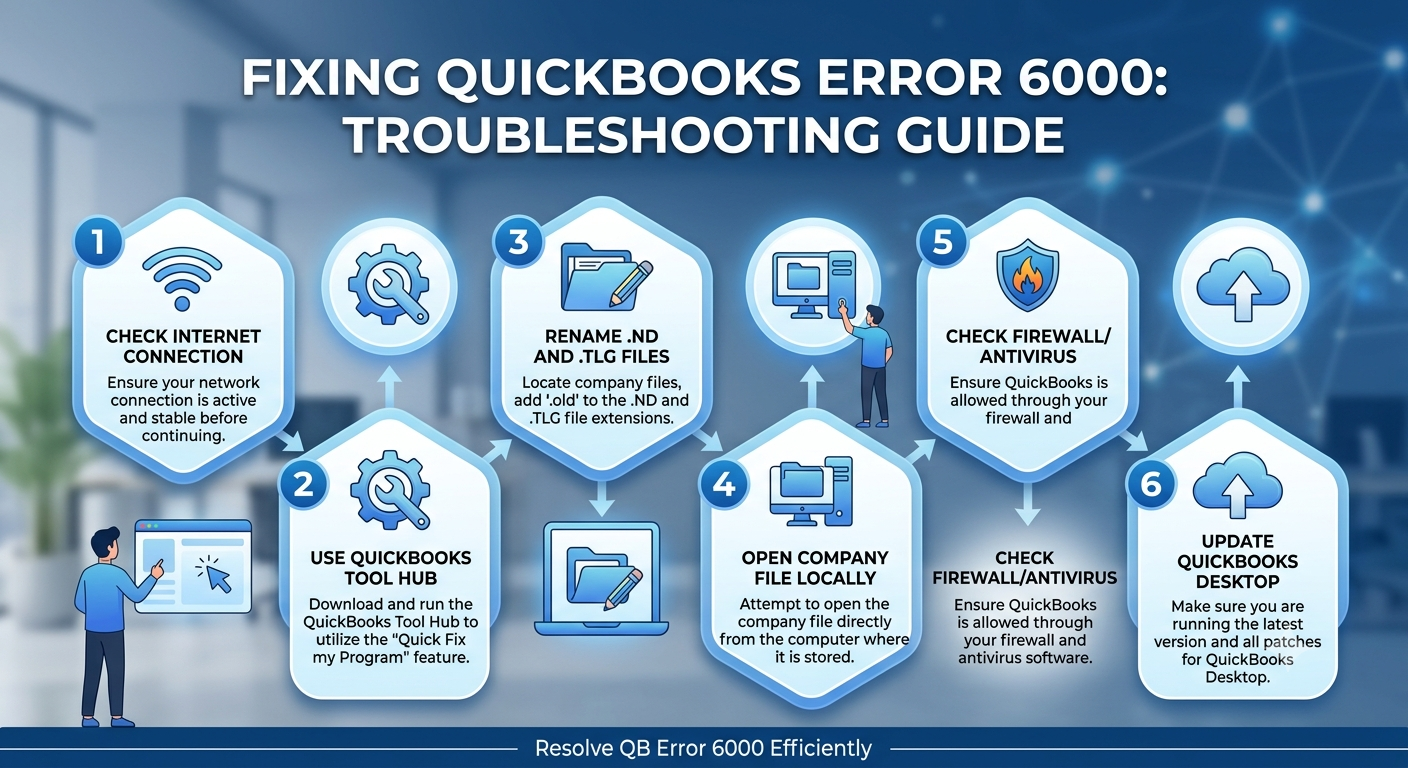
How to Fix QuickBooks Error Code 6000
Verify the Company File Location
Confirm that the company file is stored in the correct folder and is accessible from your computer.
Restart QuickBooks
Close the application completely and reopen it. Temporary software issues are often resolved with a restart.
Restart Your Computer
Restarting your computer refreshes Windows processes and may restore normal file access.
Copy the Company File to a Local Folder
If the file is stored on a network, temporarily copy it to a local folder and attempt to open it again.
Check Folder Permissions
Verify that the folder containing the company file allows the necessary read and write permissions.
Rename Configuration Files
If configuration files have become corrupted, allowing QuickBooks to recreate them can resolve file access problems.
Verify the Network Connection
If you use QuickBooks across multiple computers, ensure that the network connection is stable and functioning properly.
Review Security Software Settings
Check whether your firewall or antivirus software is restricting QuickBooks from accessing company files.
Update QuickBooks
Install the latest available QuickBooks updates to improve compatibility and resolve known software issues.
Repair the QuickBooks Installation
Use the repair option available through your operating system to fix damaged QuickBooks program files.
Restore a Recent Backup
If the company file has become severely damaged, restoring a recent backup may help recover your accounting data.
Tips to Prevent QuickBooks Error Code 6000
Following these best practices can reduce the chances of encountering this error again.
- Keep QuickBooks updated.
- Back up your company file regularly.
- Store company files in secure locations.
- Maintain a stable network connection.
- Review folder permissions periodically.
- Keep your operating system updated.
- Avoid shutting down the computer while QuickBooks is running.
- Monitor available storage space.
- Perform routine file maintenance.
- Review security software settings after updates.
Common Mistakes to Avoid
Avoid these common mistakes when working with QuickBooks company files.
- Ignoring software updates.
- Moving company files without updating their location.
- Using unstable network connections.
- Skipping regular data backups.
- Restricting folder permissions.
- Closing QuickBooks unexpectedly during file operations.
- Ignoring warning messages related to company files.
Avoiding these mistakes helps maintain reliable access to your accounting data.
FAQs
What causes QuickBooks Error Code 6000?
The error is commonly caused by damaged company files, incorrect network settings, insufficient permissions, corrupted configuration files, or security software interference.
Can restarting QuickBooks fix Error Code 6000?
Yes. Restarting QuickBooks and your computer can sometimes resolve temporary communication or file access issues.
Why can I not open my QuickBooks company file?
The file may be damaged, stored in an inaccessible location, restricted by permissions, or affected by network or configuration problems.
Should I update QuickBooks if I receive Error Code 6000?
Yes. Installing the latest updates can resolve known bugs and improve compatibility with company files.
How can I prevent QuickBooks Error Code 6000 in the future?
Keep QuickBooks updated, back up company files regularly, maintain proper folder permissions, use a stable network connection, and perform routine software maintenance.
Conclusion
QuickBooks Error Code 6000 can prevent access to important company files, but the problem is usually related to file permissions, damaged configuration files, network communication, or software settings rather than permanent data loss. Most users can resolve the issue by checking file locations, reviewing permissions, updating QuickBooks, verifying network connectivity, and repairing damaged program files.
